How Many Years a Water Heater Lasts in Arizona
Tank water heaters last about 8–12 years nationally. In the East Valley, where tap water is very hard, many tanks start showing trouble at 7–9 years, especially if they've never been flushed. Tankless heaters can last 20 years or more with yearly descaling. Maintenance, water pressure and where the heater sits all move those numbers.
Those are averages, not expiry dates. Well-kept tanks can run past 12 years, and neglected ones can fail at 6. The difference usually comes down to a few things you can control, and a few you can't.
If you don't know how old your heater is yet, start with our guide on finding your water heater's age from the serial number. Then come back here to see what that number means.
Typical Lifespan by Type
| Heater type | National range | What to expect in hard East Valley water |
|---|---|---|
| Gas tank | About 8–12 years | Many show trouble at 7–9 years; sediment sits right on the burner-heated bottom |
| Electric tank | About 8–12 years, sometimes longer | Tank may outlast a gas one, but scale burns out lower elements along the way |
| Tankless (gas or electric) | 20+ years | Reaches that only with yearly descaling; scale is its main enemy here |
| Mobile home / park model tank | Similar to standard tanks | A smaller tank has less room for sediment, so buildup can matter sooner; outside closets add heat and dust |
Do gas or electric water heaters last longer?
Electric tanks often last a little longer, because there's no flame heating the bottom of the tank where sediment collects. But in hard water, their lower heating element tends to fail first. That's a repairable part, so an electric tank may need more small fixes over its life even if the tank itself holds up.
Is a tankless heater worth it just for the longer life?
It can be, but only if you'll keep up with descaling. A tankless unit that's never descaled in water this hard builds scale in its heat exchanger and can start throwing error codes. The longer lifespan comes with a maintenance habit attached. Our tank vs. tankless comparison for Arizona weighs cost against that upkeep.
Why Arizona Is Hard on Water Heaters
- Very hard water. At about 13–16 grains per gallon, Apache Junction water leaves more minerals in a tank each year than most US homes see. Minerals settle as sediment on the tank bottom and coat electric elements. Our page on Apache Junction's hard water covers where it comes from.
- Heat around the heater. July averages about 105°F, and the record is 119°F. Heaters in garages and outside closets sit in that heat for months. It's hard on rubber washers, plastic parts, flex connectors and gas controls.
- Monsoon storms. From June 15 to September 30, outages and power blips can trip a heater's high-limit reset or its breaker, and surges can damage thermostats, elements or electronic controls such as tankless circuit boards.
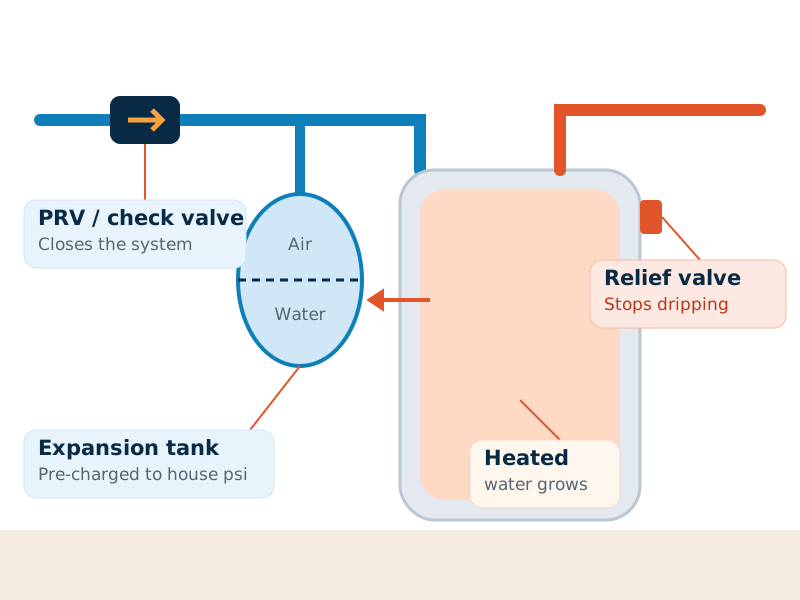
- Thermal expansion. Water grows as it heats. In homes with a check valve or pressure-reducing valve at the main, that extra volume has nowhere to go, so pressure spikes every time the heater runs. Over years, that strains the tank and the relief valve.
- No maintenance. Most tanks are never flushed, and the anode rod is rarely checked. In softer water, sediment builds slowly enough that skipping a flush matters less. Here it matters a lot.
- Heavy use. A big household cycles more water through the tank every day, which brings in more minerals and wears parts sooner.
Signs Your Water Heater Is Near the End
Age alone isn't a reason to panic. These signs, especially on a tank past 8 years, tell you the end is getting close.
- Rusty or brown hot water. Often means the anode is used up and the tank is corroding inside. If the cold water is clear and only the hot is rusty, the heater is the source.
- Rumbling that a flush doesn't fix. Hardened sediment that won't wash out keeps stressing the tank bottom.
- Water from the tank body or bottom seam. A rusted-through tank can't be repaired. See signs of a leaking tank.
- Wet insulation behind the access panel. Another sign of an inner tank leak.
- Less hot water than before. Sediment can take up a real share of the tank on an older unit.
Seeing two or more of these? Call +1 480-863-0807 and we'll take a look before it leaks.
Whether to fix or replace depends on more than age; our repair or replace guide lays out the rule. If your tank is past 10 years and sits where a leak would do real damage, planning a replacement on your own schedule is often cheaper than an emergency.
How to Make a Water Heater Last Longer in Arizona
None of these are expensive, and together they can add years.
- Flush the tank once a year. It clears loose sediment before it hardens. You can do it yourself with our guide to flushing a water heater, or have it done along with a parts check.
- Check the anode rod every few years. When it's worn down to the core wire, replacing it is far cheaper than a new tank. See our anode rod replacement page.
- Add an expansion tank if you need one. Homes with a check valve or PRV at the main usually do. A relief valve that drips after showers is a common clue. Read more about expansion tank installation.
- Keep house pressure in check. A pressure-reducing valve (PRV) holds pressure in a safe range. Very high street pressure wears out tanks, valves and fixtures, so if faucets bang or the relief valve weeps, have the pressure checked.
- Set the temperature around 120°F. That's the DOE's suggestion for most homes. Hotter water drops out more scale and adds scald risk.
- Think about a softener or scale control. Softened water means far less sediment. But it can wear anode rods faster, so keep checking the rod.
- Use a metal stand and drain pan. They don't make the tank last longer, but they limit damage when it finally goes.
Tip: On tankless units, the equivalent habit is descaling once a year. Isolation valves on the water lines make that a quick job.
Snowbird Homes and Part-Year Heaters
Apache Junction's population roughly doubles in winter, to about 80,000, and a lot of water heaters sit idle all summer. An unused tank still has hard water sitting in it, and the anode keeps working whether you're home or not.
Idle months don't wear out a tank the way daily use does, but they bring their own issues: stale or smelly water on return, a stuck drain valve, a pilot that won't relight, or a slow leak nobody noticed for weeks. Shutting the heater down properly and flushing it when you come back helps. Our snowbird water heater checklist covers both ends of the season.
Getting a Read on Your Heater
If you're not sure where your heater stands, a quick look at the age, the anode and the area around the tank tells most of the story. If you want a second opinion on an aging tank, call +1 480-863-0807 any time. If it's already dripping, our water heater leak repair in Apache Junction page explains what to do first. For more short answers, see our water heater FAQ.
Water Heater Lifespan: FAQs
Does a longer tank warranty mean a longer-lasting heater?
Often, yes. Models sold with longer tank warranties tend to have a heavier anode rod or a second one, which protects the steel longer. A warranty isn't a promise of lifespan, though, and hard water still shortens it. Check the rating label or the maker's site for your warranty length, and keep the receipt.
Can a water heater last 15 or 20 years in Arizona?
A tank can, but it's not common in hard water without good care, like yearly flushing and anode replacements. Tankless heaters reach 20 years more often, as long as they're descaled about once a year. If your tank is already past 12, it's worth pricing a replacement before it picks the day for you.
Does a heater in a hot garage wear out faster than one indoors?
The tank itself doesn't mind warm air much, but the parts around it do. July highs average about 105°F here, and garages and outside closets get hotter. That heat dries out rubber washers, flex connectors and plastic parts, so small leaks at fittings tend to show up sooner. A yearly look at the connections catches them early.
Does replacing the anode rod really extend a tank's life?
It can, as long as the tank hasn't started rusting through. The anode corrodes so the steel doesn't. Swapping a worn rod restores that protection. Once water is coming from the tank body, though, a new rod is too late.
Do mobile home water heaters wear out sooner?
Not always, but they face extra challenges. A smaller tank has less room for sediment, so buildup can matter sooner, and many sit in outside-access closets exposed to heat and dust. They also need gas models listed for manufactured-home use, so replacement options are narrower. Our mobile home water heater page covers what's different.
Does leaving my water heater off all summer shorten its life?
Not much on its own. The bigger risks are what happens around it: a leak no one sees for months, a valve that sticks, or a pilot that won't relight. Shutting it down properly and checking it on return covers most of that.