What Does Water Heater Drain Valve Replacement Involve?
Water heater drain valve replacement means shutting off the heat and water, draining the tank, removing the old valve and threading in a new one, usually a brass full-port valve in place of the factory plastic one. In hard water we flush the sediment out at the same visit, since the tank is already empty.
The drain valve is the spigot at the bottom of the tank where you'd hook up a garden hose. It sits right where sediment settles, so it takes a beating in Apache Junction, where tap water runs about 13–16 grains per gallon of hardness. Factory plastic valves often crack, clog or stop sealing well before the tank wears out.
If you're still figuring out whether the drip is from the valve, the threads or the tank, start with our drain valve leaking guide. In short: water from the spout or handle is usually the valve, while rusty water at the tank wall around it can mean the tank itself is failing. A new valve won't help then, so start with our water heater leak repair in Apache Junction page instead.
When You Need a New Drain Valve
- It drips from the spout even when closed tight, and opening it once to flush out grit didn't help.
- Water seeps around the handle or stem. The internal seal is worn.
- The plastic body is cracked or the handle spins without opening or closing anything.
- It clogs every time you flush. Small plastic valves plug up with scale, so the tank never really gets clean.
- You're getting a new heater flushed for the first time and want to upgrade before sediment builds up.
Why won't a new washer or tighter handle stop the drip?
In hard water, the drip is often caused by sandy bits of scale sitting on the valve seat. Turning the handle harder just presses the seal onto the grit, and on a plastic valve it can crack the body. A new valve also can't seal if sediment is still pouring through it. That's why we drain and clear the tank before the new valve goes in, not after.
Choosing the Right Replacement Valve
Most tank heaters have a 3/4-inch threaded opening for the drain. Several kinds of valve fit it. Here's how they compare in water this hard.
| Valve type | Good points | Drawbacks |
|---|---|---|
| Factory plastic valve | Cheap, comes with the heater | Small opening clogs, cracks with heat and age, can snap off in the threads |
| Brass boiler drain | Stronger than plastic | Still a small opening with a washer that sediment can foul |
| Brass full-port ball valve | Wide opening passes sediment, quarter-turn handle, very durable | Costs a little more; needs a cap on the hose outlet |
For most Apache Junction homes we suggest a brass full-port ball valve with a hose-thread outlet and a cap. It drains faster, clogs less and closes cleanly after a flush. On some tanks the valve needs a short brass nipple so the handle clears the heater's outer jacket.
How We Replace a Drain Valve
- Shut off the heat and the cold water. Breaker off for electric, gas control off or on pilot for gas. Then close the cold-water valve above the heater.
- Open a hot tap in the house so air can get into the tank and the water can drain out.
- Drain the tank with a hose to a safe spot outside. If the old valve is clogged, we use short bursts of cold water to break the sediment loose.
- Remove the old valve. Brass usually comes out cleanly. Plastic valves sometimes snap, and the broken piece has to be cut out carefully without damaging the tank threads.
- Flush the sediment until the water runs clear, or close to it. If white plastic bits come out with the grit, the dip tube may be breaking up, and we'll tell you.
- Install the new valve with thread sealant rated for potable water, close it, and cap the outlet.
- Refill with a hot tap open, check the valve and threads for drips, then restore power or relight the pilot. On electric heaters the breaker stays off until water runs steadily from the hot tap, so the elements never fire dry.
Can a drain valve be swapped with water still in the tank?
Not safely. The valve is at the very bottom, so the water above it has to come out first. Some people try to swap it with the tank full, but a 40- or 50-gallon tank of hot water rushing out of an open fitting is a real burn and flood risk. Since the tank is empty anyway, that's the best time to clean it.
Flushing at the Same Visit
Draining a tank for a valve swap and then refilling it without rinsing out the sediment wastes most of the effort. The sediment that ruined the old valve is still sitting on the bottom, ready to foul the new one.
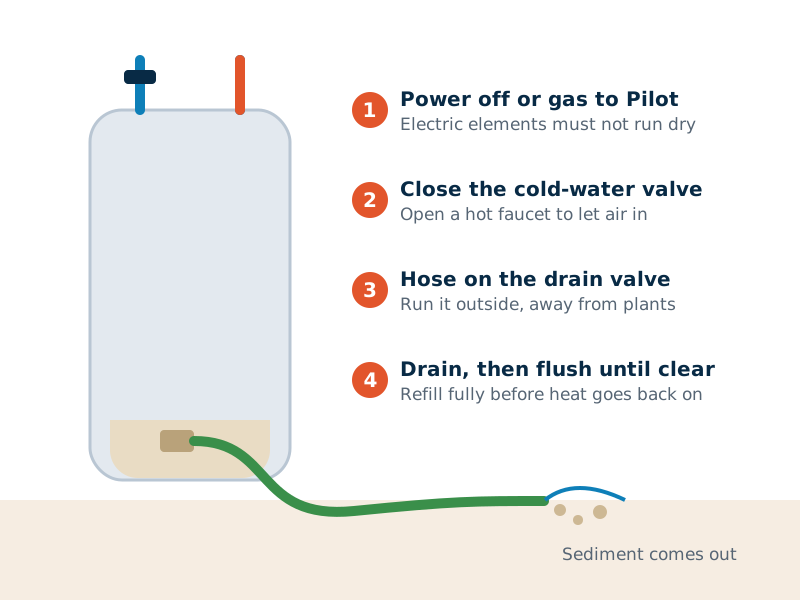
So we flush during the same visit. A water heater flush on its own runs about $75–$150 as a Phoenix-area average. Done during a valve replacement, most of the labor is already happening. With a full-port valve in place, yearly flushes after that go faster. If you'd like to do them yourself, our step-by-step flushing guide walks through it.
Hard water is the reason this matters so much here. Our Apache Junction hard water page explains where that scale comes from and what it does inside a tank.
Drain Valve Swaps on Older Tanks: The Risks
On a heater that's 10 years old or more, a drain valve swap isn't always simple. We'd rather tell you that up front than surprise you halfway through.
- The old valve may be seized in the tank threads. Forcing it can twist the fitting.
- Plastic valves may break off, leaving pieces in the opening that have to be cut out.
- The tank threads may be rusty or thin. Disturbing them can start a leak at the tank itself, which a valve can't fix.
- Heavy sediment may not fully drain, even with backflushing, in a tank that's never been cleaned.
If a 12-year-old tank has a dripping drain valve, a garden hose cap on the outlet and a plan to replace the heater may make more sense than a new valve. The cap stops a spout drip for now, though not a leak at the handle or threads. If the tank is younger and in good shape, the valve swap is usually well worth it. We look at the age, the rust around the fitting and the amount of sediment before recommending one or the other. Our repair or replace guide explains how we weigh it, and you can check your tank's age with our serial number guide.
What affects the price of a drain valve replacement?
The part is inexpensive. Most of the cost is time: how long the tank takes to drain, how much sediment has to be flushed, whether the old valve comes out cleanly, and how easy the heater is to reach. A tight outside closet on a mobile home, a valve that snaps off, or a heater on a soft, soaked platform that needs a metal stand in place of a rotted one adds time. Angi's Apache Junction average for water heater repairs of all kinds is about $646, and a simple drain valve swap is usually one of the smaller bills. We'll quote yours once we've seen the valve and the tank.
What to Check After the New Valve Goes In
- The outlet and threads stay dry for a few days. Check with a dry paper towel.
- The cap stays on the hose outlet when you're not flushing.
- Hot water comes back to normal within an hour or two for a gas tank, a bit longer for electric.
- A short burst of air or cloudy water at the taps right after the refill is normal and clears quickly.
A brass valve stays drip-free when it gets used: a short flush once a year keeps grit off its seat. If a drip comes back at the threads rather than the spout, that points to the tank, not the valve. Relief valves, anode rods and other parts are covered on our water heater repair service page. Call +1 480-863-0807 any time.
Drain Valve Replacement FAQs
Is a brass drain valve worth the upgrade?
In hard water, yes. A brass full-port ball valve has a much wider opening, so sediment passes through instead of lodging in the seat. It doesn't crack with heat the way plastic can, and it closes with a quarter turn. That makes yearly flushing easier and less likely to leave a drip behind.
How long does it take to replace a water heater drain valve?
The valve swap itself is quick. Draining and flushing the tank takes most of the time, and that depends on how much sediment is inside. A clean tank goes fast. One that's never been flushed can take much longer. Then the tank has to refill and reheat before you have full hot water.
Can a drain valve be replaced on a mobile home water heater?
Yes. The steps are the same, but in many outside closets the drain valve sits close to the door frame, wall or floor. Before choosing a valve, we check that a brass ball valve and its handle will clear the closet and still open fully. Sometimes a short brass nipple or a different handle style is needed. Smaller mobile home tanks also drain faster.
Why does my new drain valve drip after a flush?
Usually a bit of sediment is stuck on the valve seat. With a hose or bucket on the outlet, open the valve fully for a few seconds so the flow carries the grit out, then close it and put the cap back on. If it still drips after two or three tries, the seat may be scratched and the valve should be checked.
What should I do if the drain valve broke off in the tank?
Close the cold-water valve and turn off the heat right away. Keep the hot taps in the house closed, which slows the flow, and catch or direct the water outside if you can. Then call us. The broken piece can often be removed, but on an old tank the threads may be damaged.
Will a new drain valve fit my heater's opening?
Usually. Most tank heaters take a 3/4-inch threaded drain valve, so standard brass valves fit. Some tanks need a short brass nipple so the handle clears the outer jacket, and a few older or mobile-home models are different. We check the opening and the clearance before the old valve comes out, so the tank isn't left open while we hunt for parts.